The .gov means it’s official.
Federal government websites often end in .gov or .mil. Before
sharing sensitive information, make sure you’re on a federal government site.

The site is secure.
The https:// ensures that you are connecting to the official
website and that any information you provide is encrypted and transmitted securely.

Center
Focus Area
Universities
Year Est.
-
Energy and Environment
- Energy and Environment (Primary Area)
2021
-
Energy and Environment
- Energy and Environment (Primary Area)
2007
-
Energy and Environment
- Energy and Environment (Primary Area)
2016
-
Energy and Environment
- Energy and Environment (Primary Area)
- Advanced Materials
2012
-
Energy and Environment
- Energy and Environment (Primary Area)
- Biotechnology
2021
-
Energy and Environment
- Energy and Environment (Primary Area)
- System Design and Simulation
- Civil Infrastructure Systems
2024
2025
-
Energy and Environment
- Energy and Environment (Primary Area)
- Information, Communication and Computing
2022
-
Energy and Environment
- Energy and Environment (Primary Area)
2010
-
Energy and Environment
- Energy and Environment (Primary Area)
2016
-
Energy and Environment
- Energy and Environment (Primary Area)
2018
-
Energy and Environment
- Energy and Environment (Primary Area)
- Advanced Electronics
- Advanced Electronics
- Advanced Electronics
2009
-
Energy and Environment
- Energy and Environment (Primary Area)
2018
-
Energy and Environment
- Energy and Environment (Primary Area)
2013
-
Energy and Environment
- Energy and Environment (Primary Area)
2012
-
Energy and Environment
- Energy and Environment (Primary Area)
- Sensing and Information Systems
2023
-
Energy and Environment
- Energy and Environment (Primary Area)
2010
-
Energy and Environment
- Energy and Environment (Primary Area)
2009
-
Energy and Environment
- Energy and Environment (Primary Area)
2019
-
Energy and Environment
- Energy and Environment (Primary Area)
2014
-
Energy and Environment
- Energy and Environment (Primary Area)
- Energy and Environment
2021
-
Energy and Environment
- Energy and Environment (Primary Area)
- Energy and Environment
2023
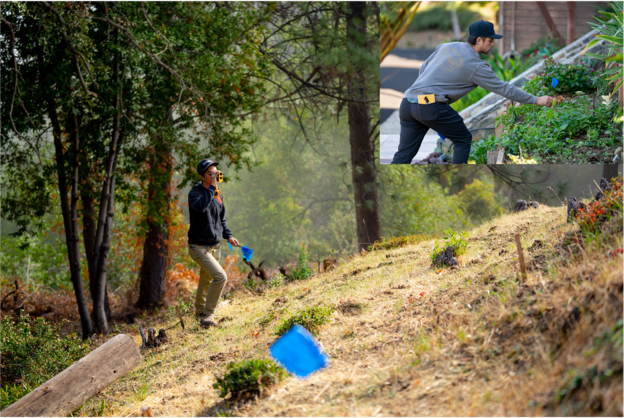
Quantifying wildfire mitigation activities done by residents: Assessing hazards and understanding resident behavior
Structural losses from wildfires are increasing in California, the United States, and globally. Research shows that fuel (e.g., flammable materials ranging from natural vegetation to synthetic building materials) in, on, or within 100 feet of structures contributes to structure loss or damage from wildfire; this focal area is often called the Home Ignition Zone (HIZ). Residents within the wildfire urban interface (WUI) often want to mitigate wildfire hazards, but often fall short of the complete risk reduction outlined by state or professional entities.
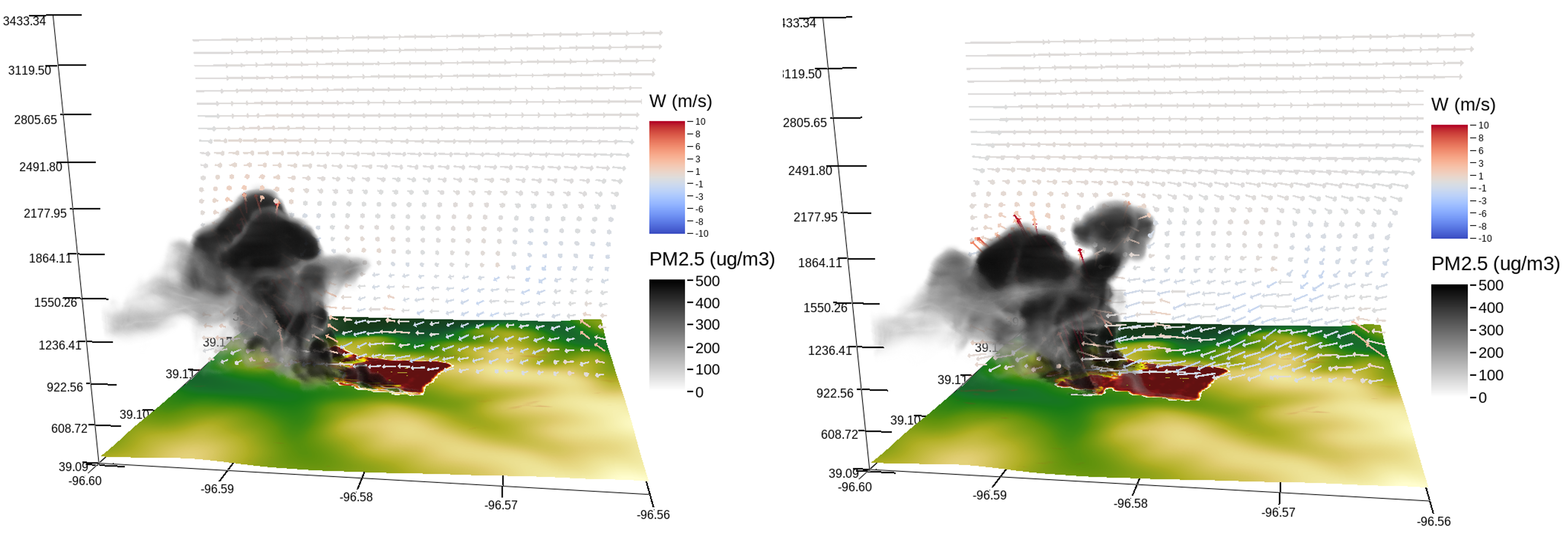
FireBench
The increasing frequency and size of large catastrophic wildfires have driven investment in and advancements in wildfire modeling. The result is that today, academics and industry have developed many complex, varied models to help government agencies, companies, and landowners predict wildfire hazards and plan to mitigate them. Currently, there is no framework that allows for model validation against multiple sources of observation, accounts for uncertainty, and is scientifically rigorous. FireBench proposes a model-agnostic validation and intercomparison framework that can be integrated with various data sources and customized to suit both model type and end-user needs.
Pure Metal Production Dramatically Improved with Pulsed Laser System
A method to improve metal production has just been developed by researchers funded by the National Science Foundation's (NSF) Industry-University Cooperative Research Center (IUCRC) – Center for Resource Recovery & Recycling (CR3) – at the Worcester Polytechnic Institute and the Colorado School of Mines with an international site at KU Leuven, Belgium.