New A.I. Tool Aims at Reducing Breast Cancer Deaths
More than 40,000 women and 500 men in the United States die from breast cancer each year, according to the American Cancer Society. But a novel computer model could help cut those numbers in half by 2026. The artificial intelligence (AI) tool is built using 1.6 million anonymous healthcare entries from more than 260,000 breast cancer patients over a period of 41 years.
Learn More
Catalyzing Commercialization: Ultrasonic Dehydration of Protein Suspensions
Today, consumer food choices, as well as food processing innovations, are driven by health, nutrition, and sustainability considerations. Plant proteins, a sustainable alternative to meat, are being used more frequently in foods from protein bars to pasta. At the heart of many food processes is drying. Proteins are routinely dried to improve storage stability, expand alternatives to product formulation, and enhance bioavailability.
Learn More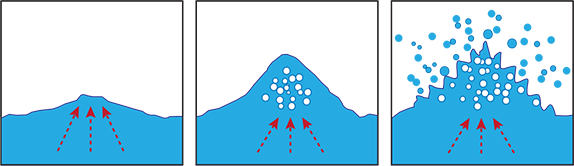
Catalyzing Commercialization: Unlocking the Power of RNA Interference for Insect Pest Management
In recent decades, insects have become more resistant to pesticides. As resistance becomes more widespread, the agricultural biotechnology sector has sought viable alternatives to curtail the huge economic losses associated with insect pests. One of these alternative approaches, called RNA interference (RNAi), could be used to kill pests by silencing genes that are critical for their survival.
Learn More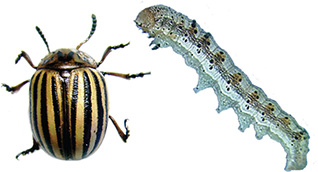
Catalyzing Commercialization: Solar Paper Powers Internet-of-Things Devices
Today’s solar cells are mainly used for large-scale power production. However, the up-and-coming internet of things (IoT) will require many sensors and devices to transmit information wirelessly to computer networks and mobile personal electronics. Those sensors and devices could be powered with solar cells that harvest energy from either freely available sunlight or indoor lighting, provided the solar cells are small, inexpensive, lightweight, and able to conform and adhere to surfaces with any shape or texture.
Learn More
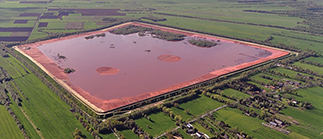
Catalyzing Commercialization: An Economically Viable Process to Recover High-Value Products from Red Mud
Aluminum (Al) possesses many desirable properties: a high strength-to-weight ratio, corrosion resistance, thermal conductivity, and ductility. Over the past five decades, Al and its alloys have been used extensively for automotive, construction, electrical, and chemical applications. The growing demand for Al is met with an increase in demand for bauxite, a native ore for primary Al production.
Learn More